
What is Aerial Yoga vs. Aerial Silks

Updated: Dec 29, 2025

Aerial fitness continues to grow in popularity as people look for effective, low-impact workouts that also build strength, flexibility, and body awareness. Two of the most common aerial fitness styles are aerial yoga and aerial silks. While both use suspended fabric, they differ significantly in structure, intensity, and outcomes.
Understanding what each class is and is not helps clarify how they compare and what goals they support. This guide will help you choose what type of class is best for you, and will help you prepare for your future aerial classes.
What Aerial Yoga Is and Is Not
Aerial yoga uses a single fabric hammock suspended from the ceiling to support the body during stretching, balance work, and flowing sequences. The hammock assists movement, reduces pressure on joints, and allows students to explore poses with more ease and control.
Aerial yoga is not acrobatic or circus-based. It is not fast paced, high impact, or strength focused. Inversions are optional, and flexibility is built gradually over time. The emphasis is on supported movement, mobility, and calm, mindful practice rather than athletic tricks or performance.

What Aerial Silks Is and Is Not
Aerial silks uses two long pieces of fabric that students climb, wrap, and move through while building strength, coordination, and aerial technique. Movement is more vertical and skill based, with an emphasis on controlled progression.
Aerial silks is not only for performers or advanced athletes. Beginners start with foundational skills close to the ground, and strength is developed over time. Students are not expected to climb high or perform immediately. While performance opportunities exist, participation is always optional.
Fabric Setup and Movement Style
Aerial yoga relies on a single hammock that remains open and stable, allowing the body to rest into the fabric. Movement is grounded and supportive, prioritizing ease and balance.
Aerial silks uses two fabric tails that are actively manipulated throughout class. Movement involves wrapping, transitioning, and climbing, requiring more grip strength and coordination.
Class Structure Comparison
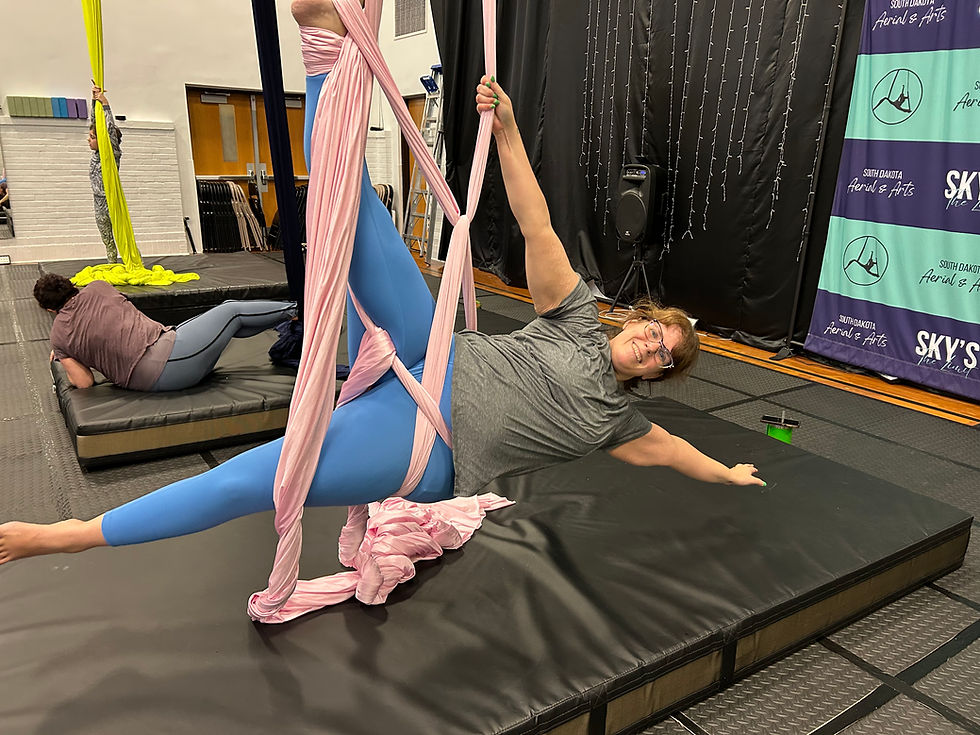
Aerial yoga and aerial silks classes typically run 45 to 60 minutes, though the internal structure differs.
A typical aerial yoga class focuses on progressive mobility and stretching. Students follow instructor led flows in a calm, tranquil environment. The hammock provides consistent support, making the class joint-friendly and accessible.
A typical aerial silks class begins with a brief warm up lasting approximately 5 to 7 minutes, followed by aerial conditioning to build strength. The remainder of class focuses on aerial skills that change weekly. Most classes include climbing, inversions, and continued development of fundamental techniques.
Fitness Goals Supported by Each Class

Flexibility
Both aerial yoga and aerial silks improve flexibility.
Aerial yoga emphasizes assisted stretching and increased range of motion.
Aerial silks develops flexibility through active movement, wraps, and transitions.
Strength
Aerial silks places a strong emphasis on upper body, grip, and core strength
.Aerial yoga develops light to moderate strength through balance, stabilization, and controlled movement.
Low Impact Exercise
Aerial yoga is a consistently low impact workout that reduces joint stress.
Aerial silks is higher intensity but still lower impact than many traditional workouts due to fabric support.
Older Adults
Aerial yoga is commonly used by older adults for mobility, balance, and joint-friendly movement.
Aerial silks can be adapted for older adults with modifications based on comfort and mobility.
Community Building
Both class types foster strong community connections.
Aerial yoga builds community through shared calm and collective movement.
Aerial silks builds community through shared challenges, progression, and skill development.
Weight Loss
Both aerial yoga and aerial silks can support weight loss as part of an active lifestyle.
Aerial yoga supports consistency, stress reduction, and sustainable movement habits.
Aerial silks increases calorie burn and muscle engagement, supporting metabolic health.
Progression and Performance Opportunities
Aerial yoga focuses on wellness, consistency, and body awareness rather than performance. Progress is measured through improved mobility and comfort.
Aerial silks follows a structured progression system with multiple skill levels. As students advance, they may choose to explore optional performance opportunities such as showcases or community events. Performance is never required.
Aerial Fitness for Kids and Adults
Both aerial yoga and aerial silks are accessible to beginners and adaptable across age groups. Many studios offer aerial fitness classes for kids, teens, and adults, allowing participants to explore movement, strength, flexibility, and creativity at appropriate levels.
Aerial Fitness at South Dakota Aerial & Arts
South Dakota Aerial & Arts offers a variety of aerial fitness classes designed for different movement goals and experience levels. From low-impact aerial yoga to strength-based aerial silks, each class type provides a distinct approach to building confidence, fitness, and community through aerial movement.
No experience required. Just curiosity.
![Silks, Hammock, Lyra, Bungee: What's the Difference? [2026 Class Overview]](https://static.wixstatic.com/media/acd6c6_53cbf4c2e8104251a1bcb0ef82f1ce96~mv2.jpeg/v1/fill/w_980,h_1742,al_c,q_85,usm_0.66_1.00_0.01,enc_avif,quality_auto/acd6c6_53cbf4c2e8104251a1bcb0ef82f1ce96~mv2.jpeg)
Comments